
Surface
Prepare, repair, remove failed layers, resurface, select colors, and stripe the approved layout.
Tennis court conversion
Do not start with the new lines.
Start with the existing court—its cracks, water, dimensions, fencing, lights, entrances, and the way the facility needs to operate.
Send wide photographs from every corner, surface close-ups, and whether tennis must remain.
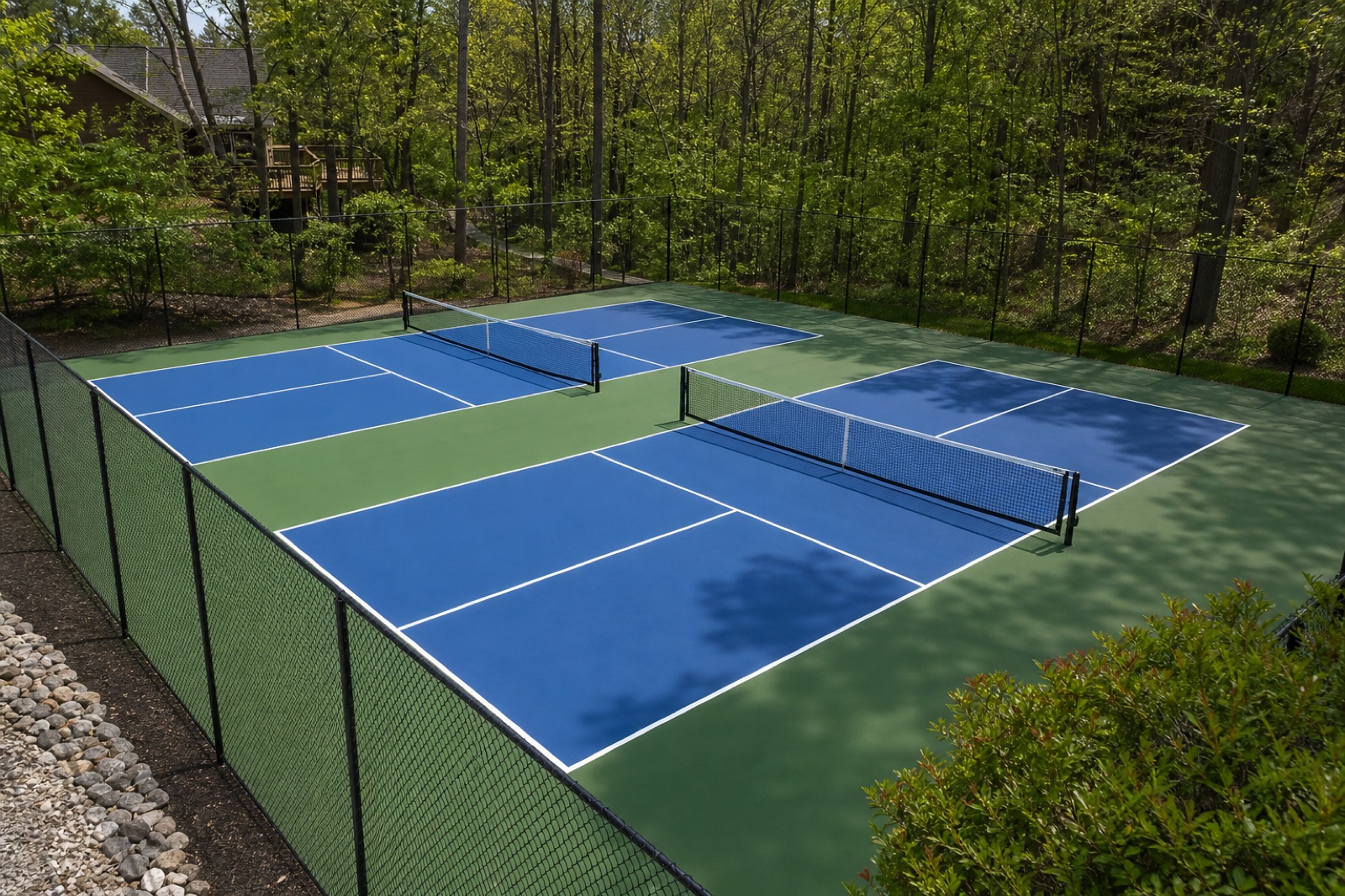
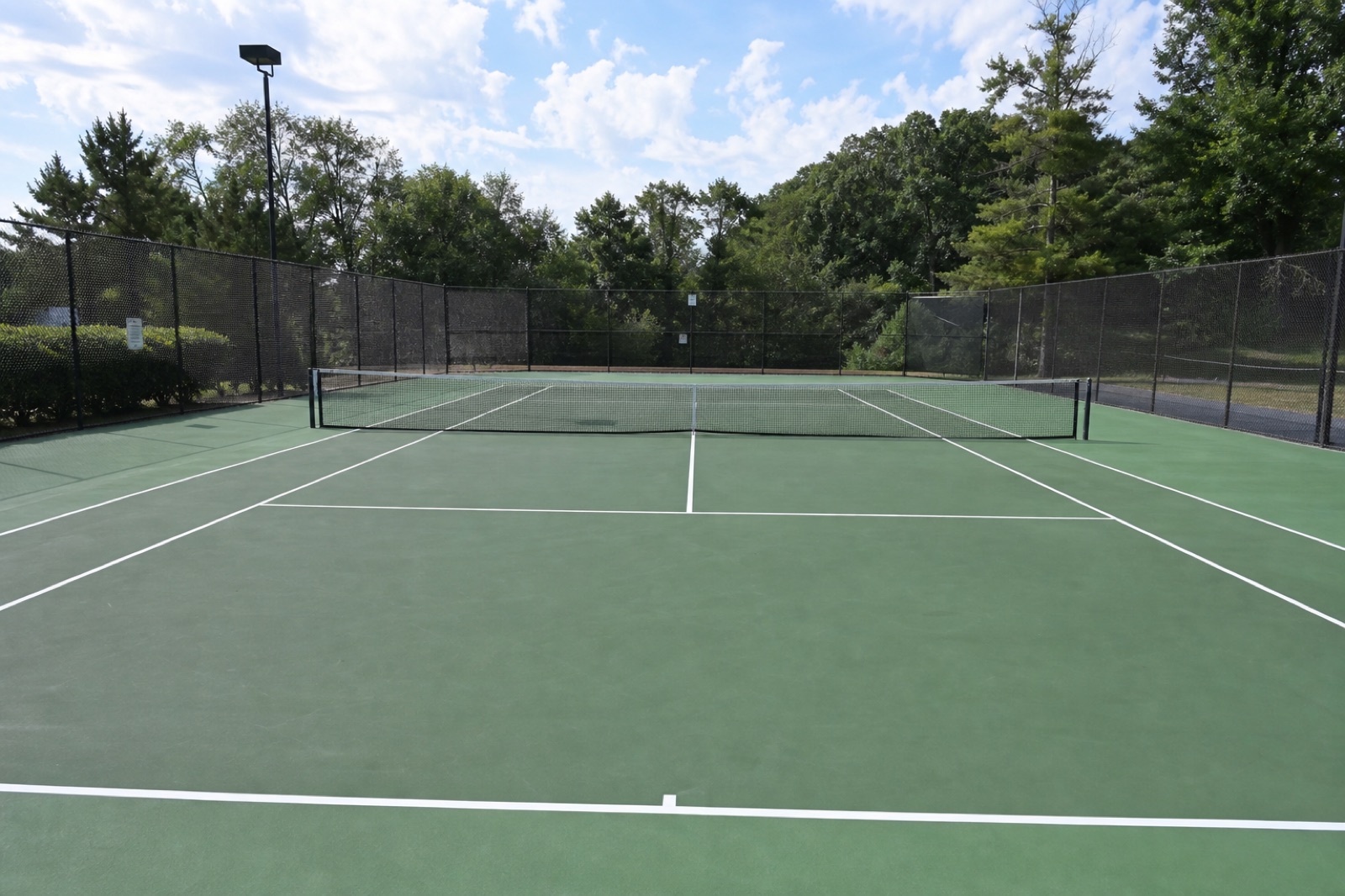
Before and after
Surface condition and enclosure geometry matter before court count, colors, or permanent nets.
Layout decisions
| Approach | Best fit | Tradeoff |
|---|---|---|
| Shared-use lines | Facilities that must retain tennis | Lower disruption, but more visual markings and setup |
| Two dedicated courts | Comfortable spacing and simpler circulation | Lower capacity than a tight four-court layout |
| Three or four courts | Programs prioritizing maximum capacity | Tighter run-off, dividers, gates, and ball control |
| Full reconstruction | Severe movement, drainage, or base failure | Larger scope, but addresses conditions paint cannot fix |
Condition first
Cracks, low areas, failed coatings, old lines, net foundations, and drainage must be resolved before the new layout is finished.
Prepare, repair, remove failed layers, resurface, select colors, and stripe the approved layout.
Choose portable or permanent nets, post foundations, divider systems, and storage.
Reposition gates, coordinate fencing and lights, and create safe paths between courts.
Conversion process
Decide who plays, whether tennis remains, desired court count, operating hours, and programming.
Review cracks, water, movement, coatings, fencing, gates, lights, posts, and access.
Compare one-, two-, three-, or four-court options against the actual enclosure.
Set the role of tennis, equipment type, and required line system.
Determine what can remain and whether repair, resurfacing, or reconstruction is required.
Position nets, dividers, gates, paths, seating, storage, lights, and maintenance access.
Prepare, repair, surface, stripe, equip, and inspect the finished courts.
Document maintenance, permitted uses, existing-condition exclusions, and warranties.
Conversion FAQs
The best layout follows condition, dimensions, and programming.
Reviewed July 2026. Layout dimensions were checked against USA Pickleball’s current rulebook (opens in a new tab) and construction guidance.
One to four may be possible depending on the enclosure and layout. Four-court arrangements can create tight run-off and divider space, so usability must be tested.
Yes, through a shared-use layout. The decision should account for visual clarity, equipment, programming, and any sanctioned tennis requirements.
Not always. A stable court may only need preparation and striping. Cracks, peeling, low areas, fading, or rough texture may justify repair and resurfacing.
Two usually provides more comfortable spacing and easier dividers. Four increases capacity but can create tighter clearances and more ball interference.
Possibly. Pole locations, fixtures, aiming, shadows, and coverage should be evaluated against the new pickleball layout.
Start with the old court
Send wide court photos, cracks, low areas, fences, gates, nets, lights, drains, and any existing plans. Tell us whether tennis must remain and how many pickleball courts you are considering.