Resurfacing
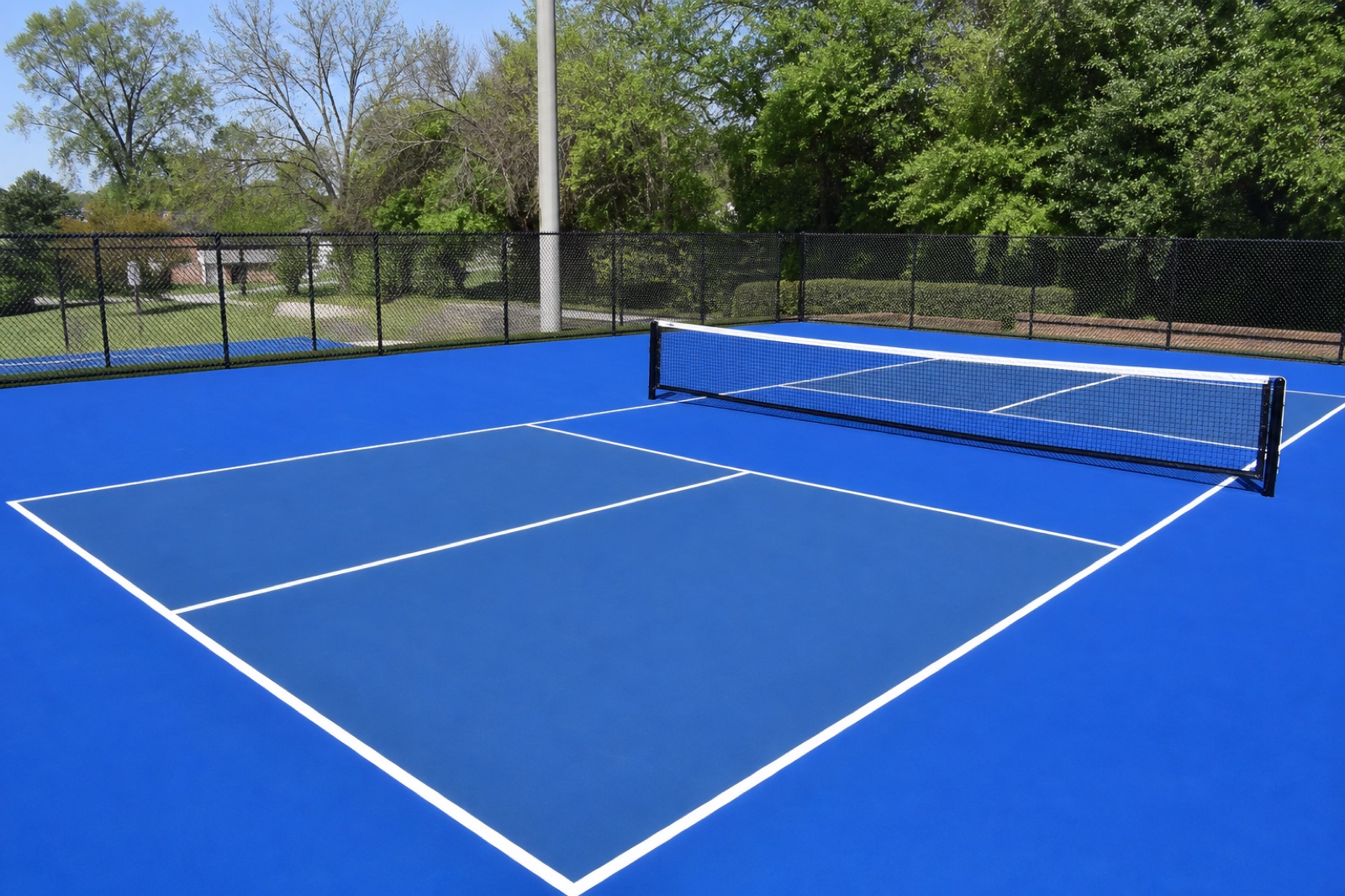
Faded color, worn texture, minor cracks, old markings, small patches, and normal play wear may suit a new acrylic system.
Pickleball court repair & resurfacing
A crack is not just a crack. It is a clue.
We inspect and resurface worn courts by correcting visible damage while identifying what may be happening beneath it.
Send wide court photos plus close-ups of cracks, peeling, low areas, drains, and worn lines.
Read the evidence
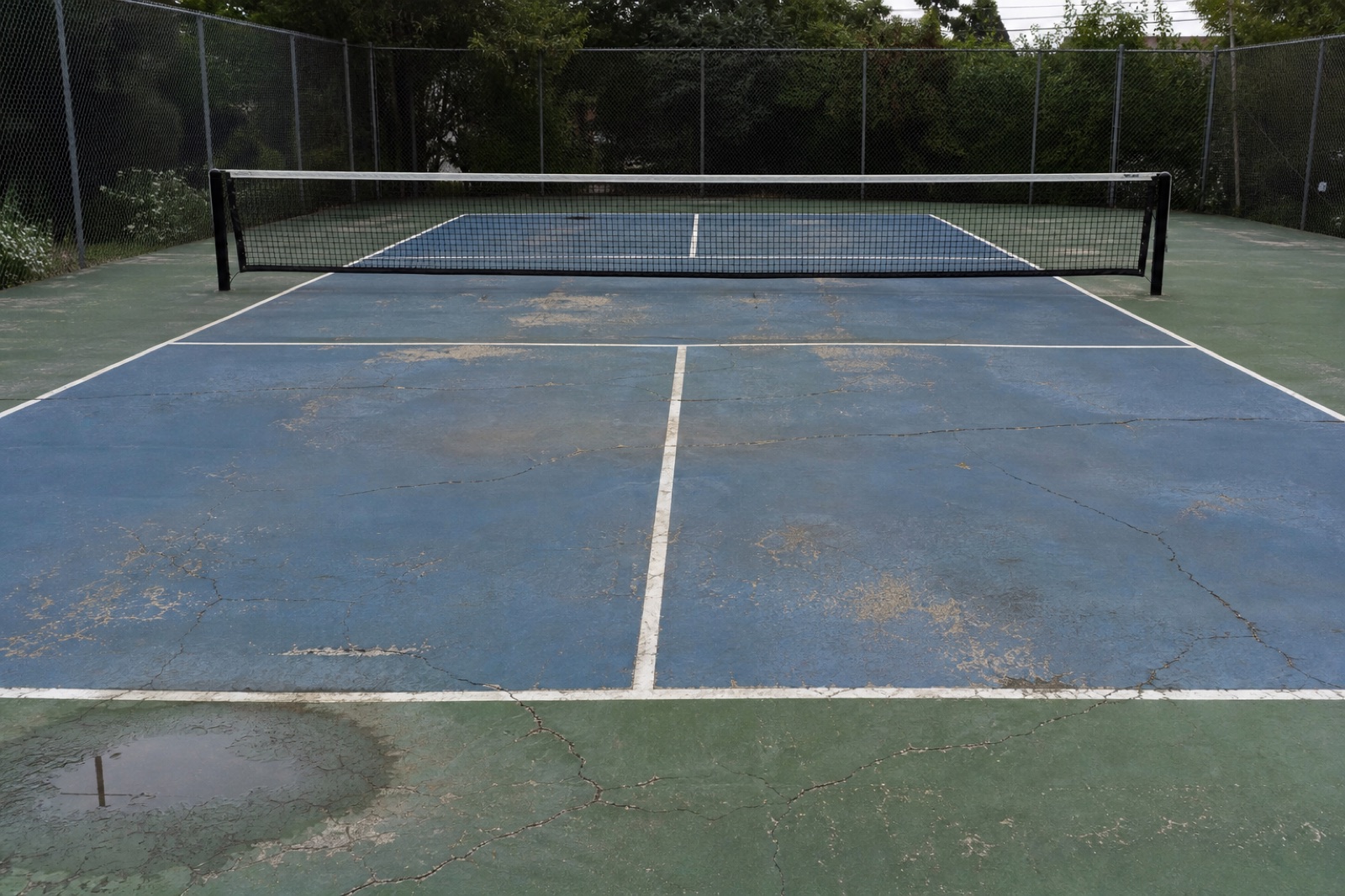
Movement, water, roots, poor adhesion, or years of Kentucky weather often happen before the visible symptom.
Choose the honest scope
Faded color, worn texture, minor cracks, old markings, small patches, and normal play wear may suit a new acrylic system.
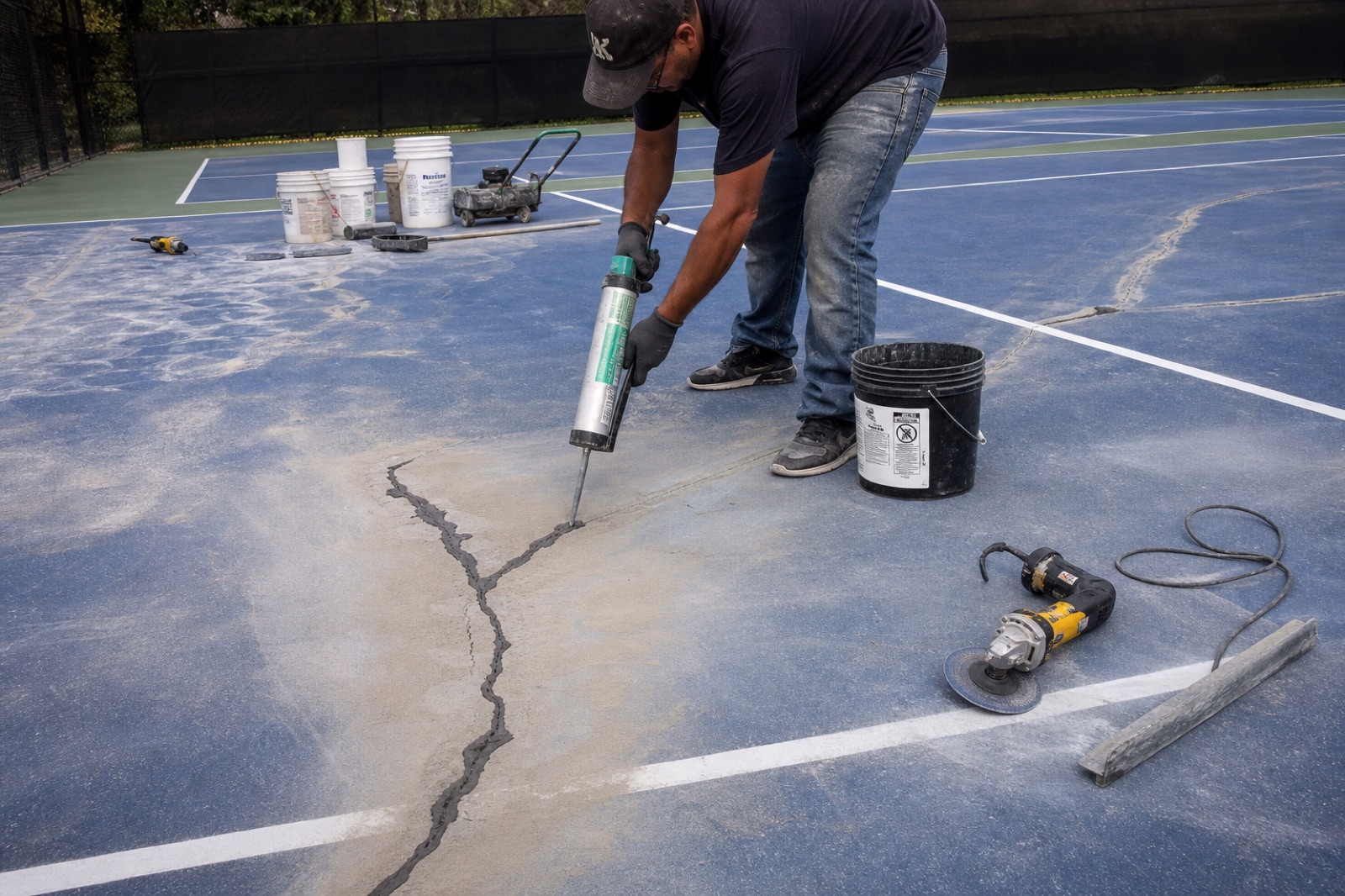
Crack treatment, low-area correction, grinding, failed-coating removal, drainage work, and preparation come first.
Settlement, severe movement, widespread structural cracking, base collapse, or major drainage failure may require deeper work.
Preparation matters
Professional court coating provides traction, texture, ball response, color, and line visibility. It must bond to a stable, properly prepared layer.
Resurfacing process
Learn when it was built, surfaced, repaired, and how the current problems changed.
Examine cracks, movement, low areas, drainage, coatings, texture, roots, posts, and edges.
Choose cleaning and recoating, repair and resurfacing, or deeper reconstruction.
Clean, scrape, grind, treat cracks, patch, level, and remove failed material as required.
Install the approved resurfacer, color coats, and optional cushion layers.
Measure, mask, and stripe the approved pickleball or shared-use layout.
Review the surface, lines, accessories, maintenance, and applicable warranty coverage.
Resurfacing FAQs
Photos begin the conversation. The condition determines the useful scope.
Reviewed July 2026. Resurfacing scope and component costs were checked against SportMaster (opens in a new tab) and PickleTile (opens in a new tab) guidance.
There is no universal schedule. Usage, climate, drainage, foundation condition, maintenance, surface system, and previous workmanship all affect service life.
Some can. Moving structural cracks may return because the foundation continues to move. The likely result should be explained before work begins.
Many localized low areas can be improved with patching or leveling. Large areas caused by settlement or structural failure may require deeper correction.
No. Loose or poorly bonded layers and their cause should be evaluated and removed or prepared before a compatible system is installed.
Yes. Resurfacing is the natural time to update court colors, line contrast, logos, and dedicated or shared-use layouts.
Show us what the court is saying
Send the faded lines, returning crack, persistent puddle, or peeling patch. We will help determine whether the court needs resurfacing, deeper repairs, or another solution.