
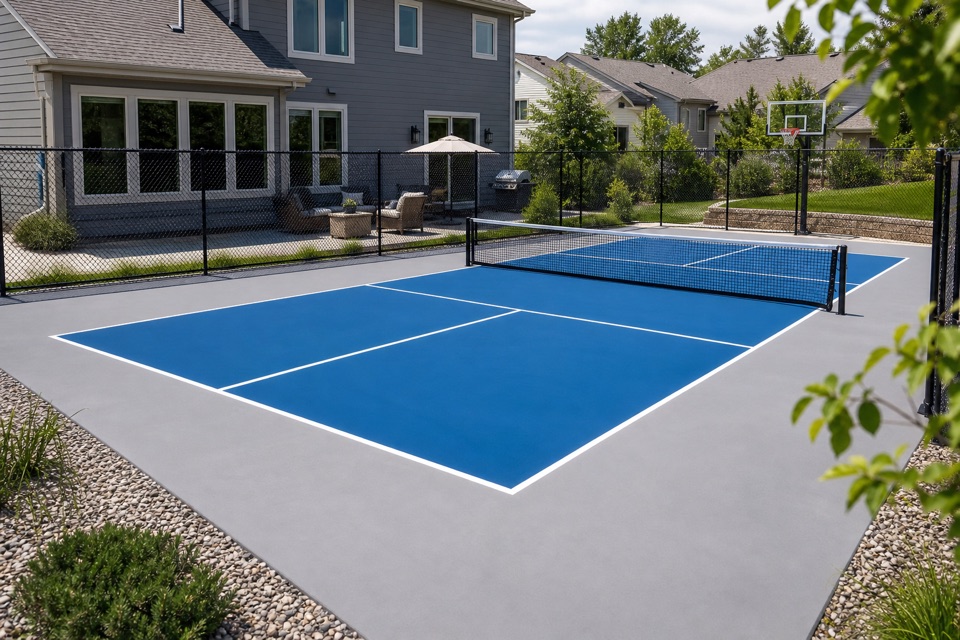
Concrete
Firm, consistent, and capable of strong structural control when soil, drainage, reinforcement, joints, finishing, and curing are handled correctly.
Pickleball court bases & surface systems
The surface you see is only the last few millimeters of the court.
We help select the foundation, coating, cushioning, texture, and color system around the site, players, budget, and expected lifespan.
Tell us whether the project is new or existing, indoor or outdoor, and which matters most: initial cost, comfort, longevity, or maintenance.
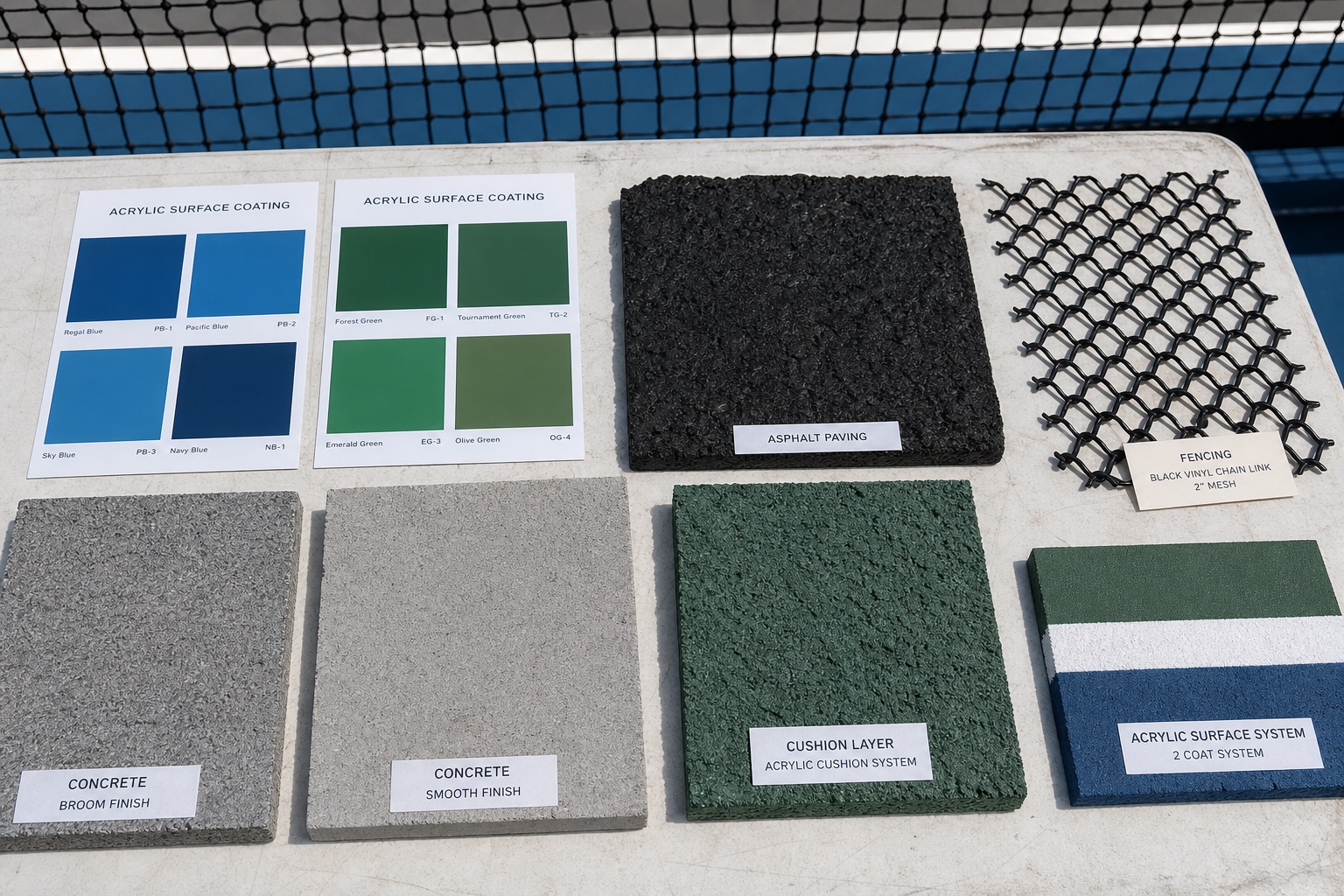
A complete stack
Most decisions begin with a color chart. The important layers begin earlier: prepared soil, drainage, aggregate, foundation, surface preparation, resurfacer, optional cushion, textured color, and precise lines.
Each layer depends on the one below it. The coating receives the compliments. The foundation carries the court.
Choosing the green first is like choosing roof shingles before checking whether the house has walls.
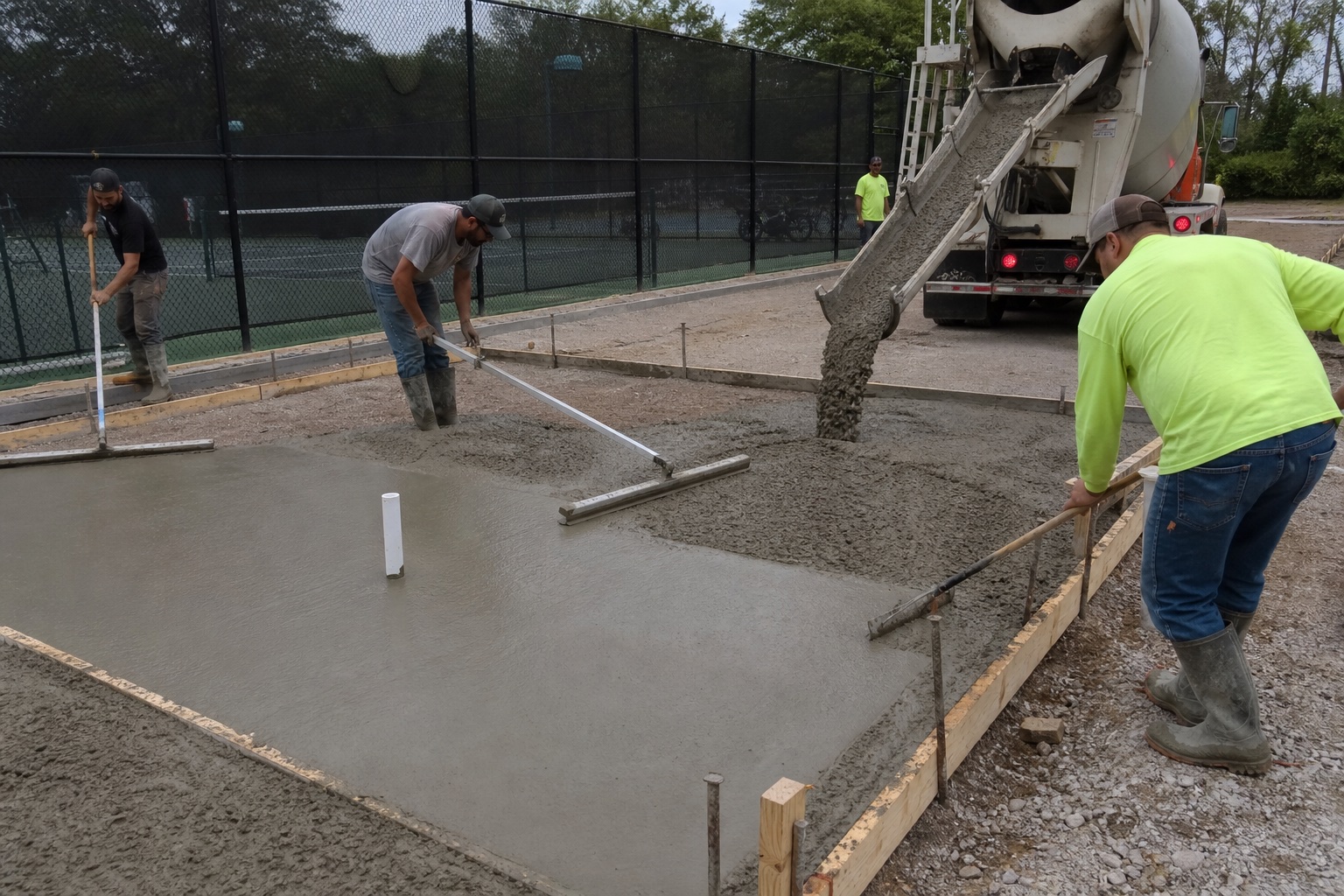
Compare complete systems
The best combination depends on the property, players, maintenance plan, and acceptable movement over time.
Firm, consistent, and capable of strong structural control when soil, drainage, reinforcement, joints, finishing, and curing are handled correctly.
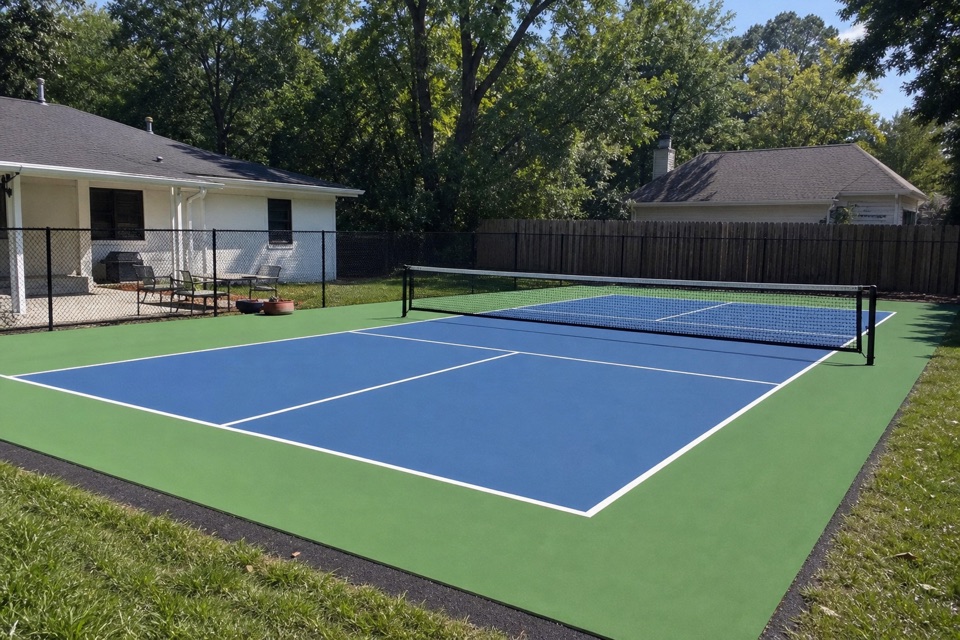
A practical foundation for some sites with a different initial cost, movement profile, oxidation, maintenance, and resurfacing expectation.
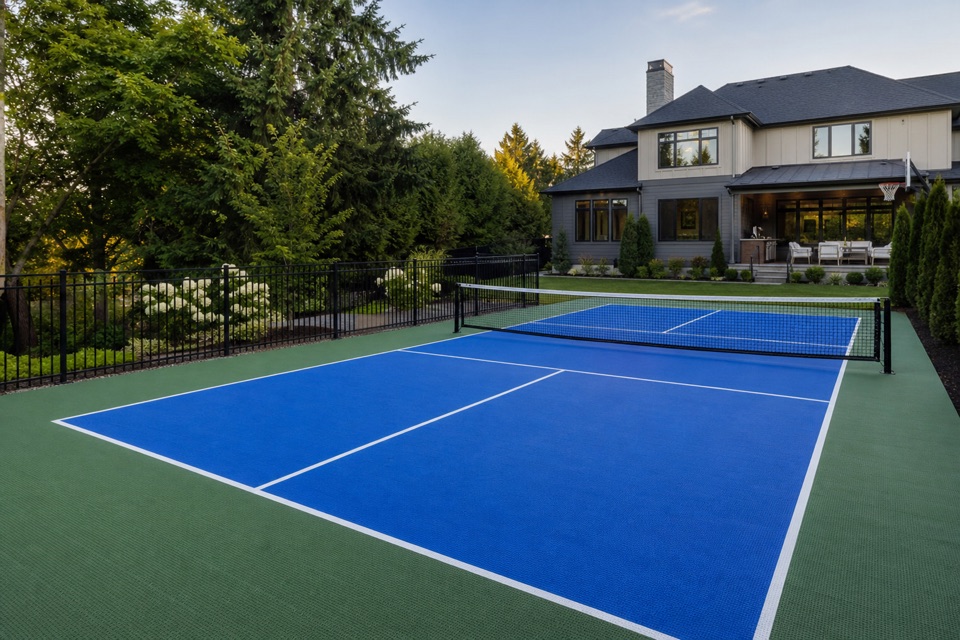
Textured systems establish color, traction, pace, and bounce. Cushion layers may improve comfort but cannot correct a failing foundation.
Surface decision table
| System | Useful for | Watch closely |
|---|---|---|
| Standard acrylic | Familiar outdoor play and broad color options | Base stability, cracks, drainage, texture, maintenance |
| Cushioned acrylic | Frequent play and projects prioritizing comfort | Added cost, substrate condition, installation and care |
| Modular tile | Certain indoor, moisture, renovation, or reversible needs | Seams, sound, bounce, cleaning, player expectations |
| Existing sport floor | Shared gyms or approved indoor facilities | Traction, markings, protection, bounce, compatibility |
Choose for ball visibility, line contrast, glare, heat, maintenance appearance, and the surrounding property—not the sample card alone.
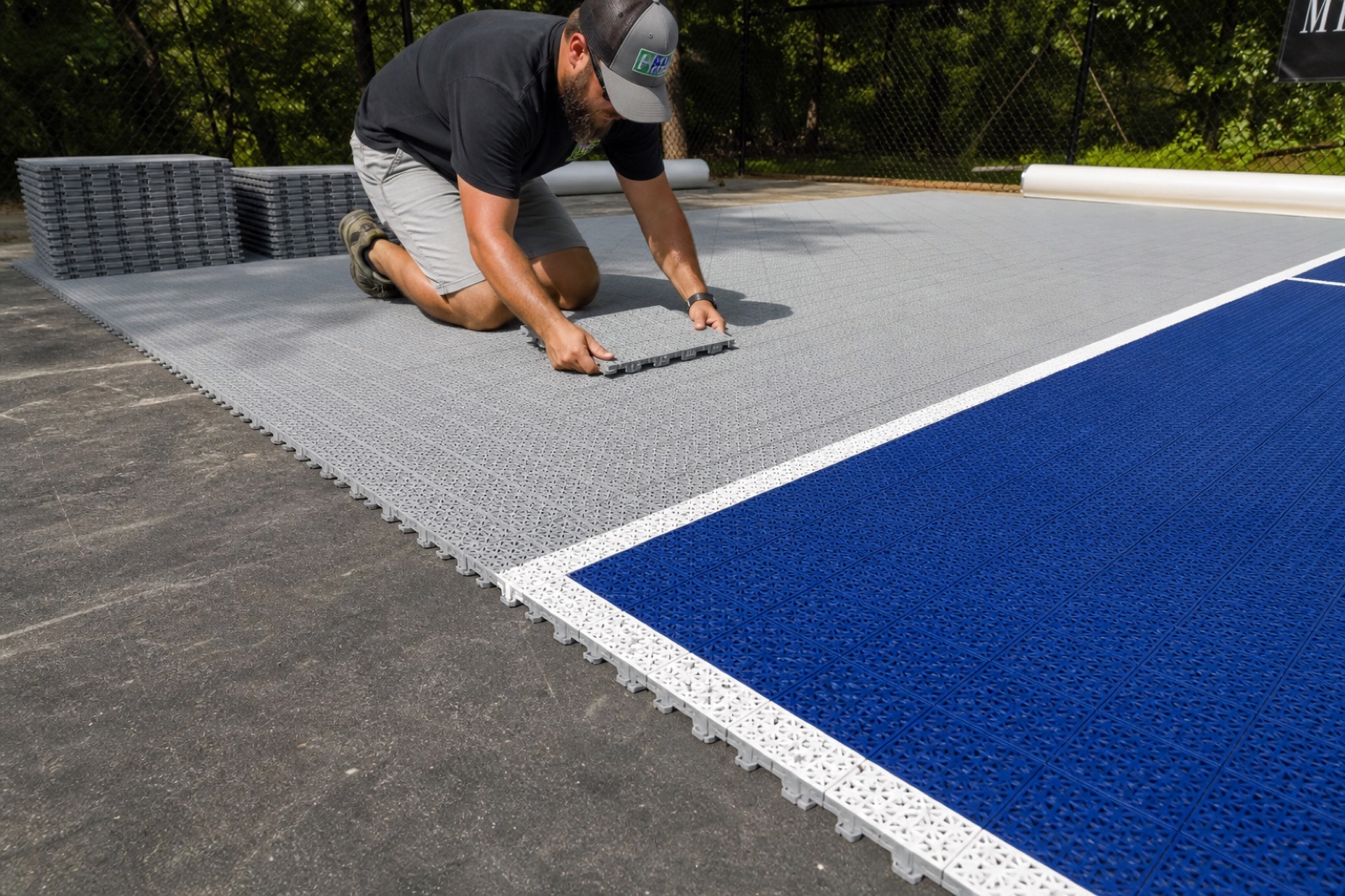
How players feel it
Surface construction sequence
Confirm soil, excavation, drainage, elevations, and access before building upward.
Place and compact the specified stone base to support the foundation and drainage plan.
Construct the selected concrete or asphalt system with the required slope and details.
Allow curing, then address joints, cracks, profile, cleanliness, and compatible preparation.
Install resurfacer, optional cushion layers, textured color coats, and regulation lines.
Surface FAQs
A coating can improve the playing layer. It cannot negotiate with movement underneath it.
Reviewed July 2026. Surface layers and cost components were checked against SportMaster surfacing guidance (opens in a new tab).
The answer depends on site, budget, use, comfort, maintenance, and desired lifespan. Professional acrylic systems over properly constructed concrete or asphalt are common outdoor choices.
Concrete offers greater structural control when designed and installed for the project. Asphalt can suit appropriate sites at a different initial cost and maintenance profile.
Cushioned acrylic systems add resilient layers that may reduce impact and improve comfort. They remain firm athletic surfaces.
They can work for particular indoor, moisture, renovation, or reversible installations. Bounce, seams, sound, cleaning, and player preference should be evaluated.
It may cover the appearance of a repaired crack, but it cannot stop active foundation movement. Structural cracks may return through the finish.
Do not start with a color chart
Begin with the soil, drainage, foundation, players, number of games, and the Kentucky winters the court should survive. Then choose the playing surface.