
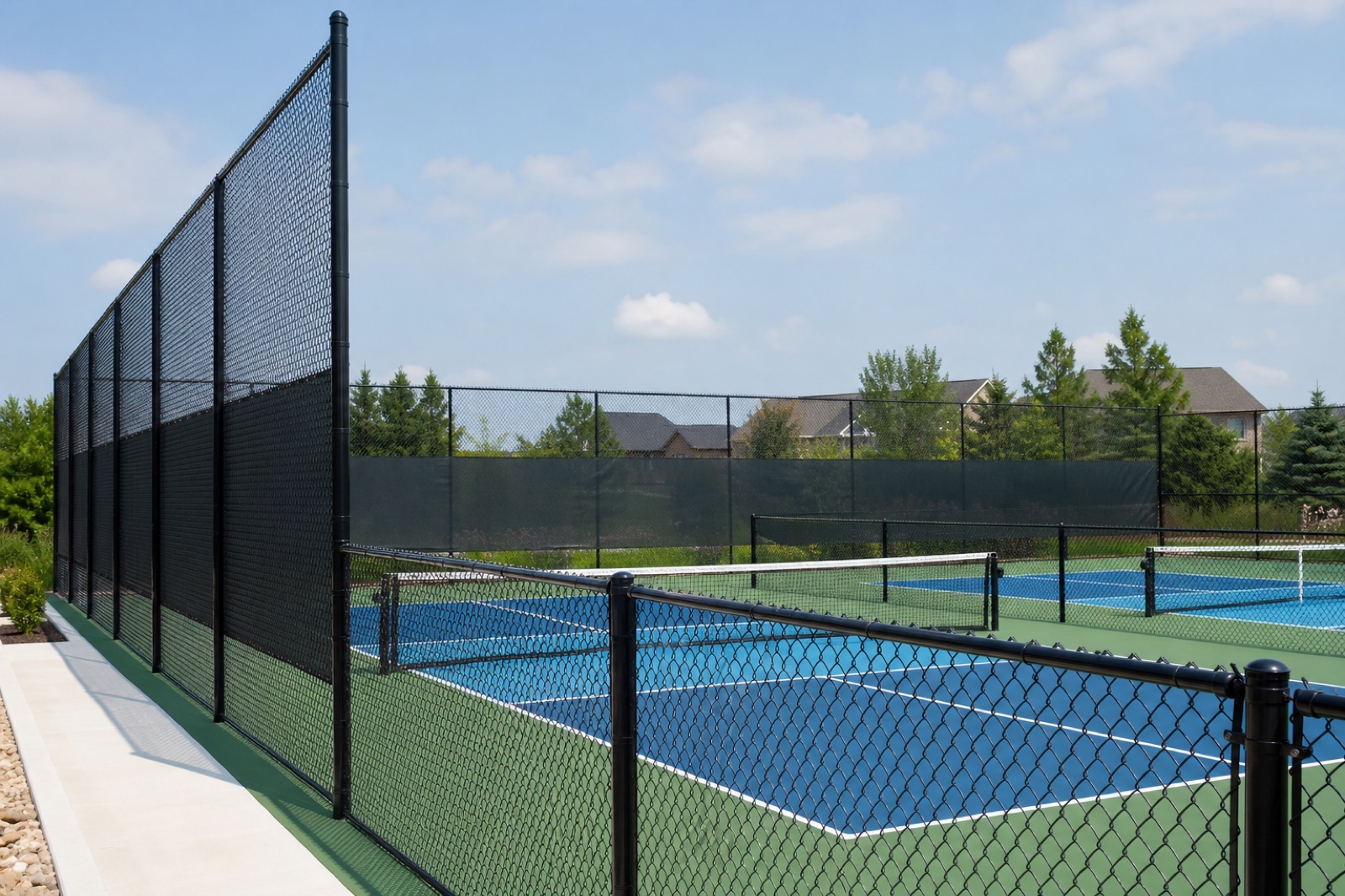
Height and mesh
Use taller backstops where balls leave most often and openings small enough to contain a pickleball.
Pickleball court fencing & gate installation
A fence does more than keep the ball inside.
It controls entry, loose balls, neighboring games, visibility, maintenance access, and how the facility operates.
Send the court layout, photographs, court count, access needs, and details about existing fencing or gates.
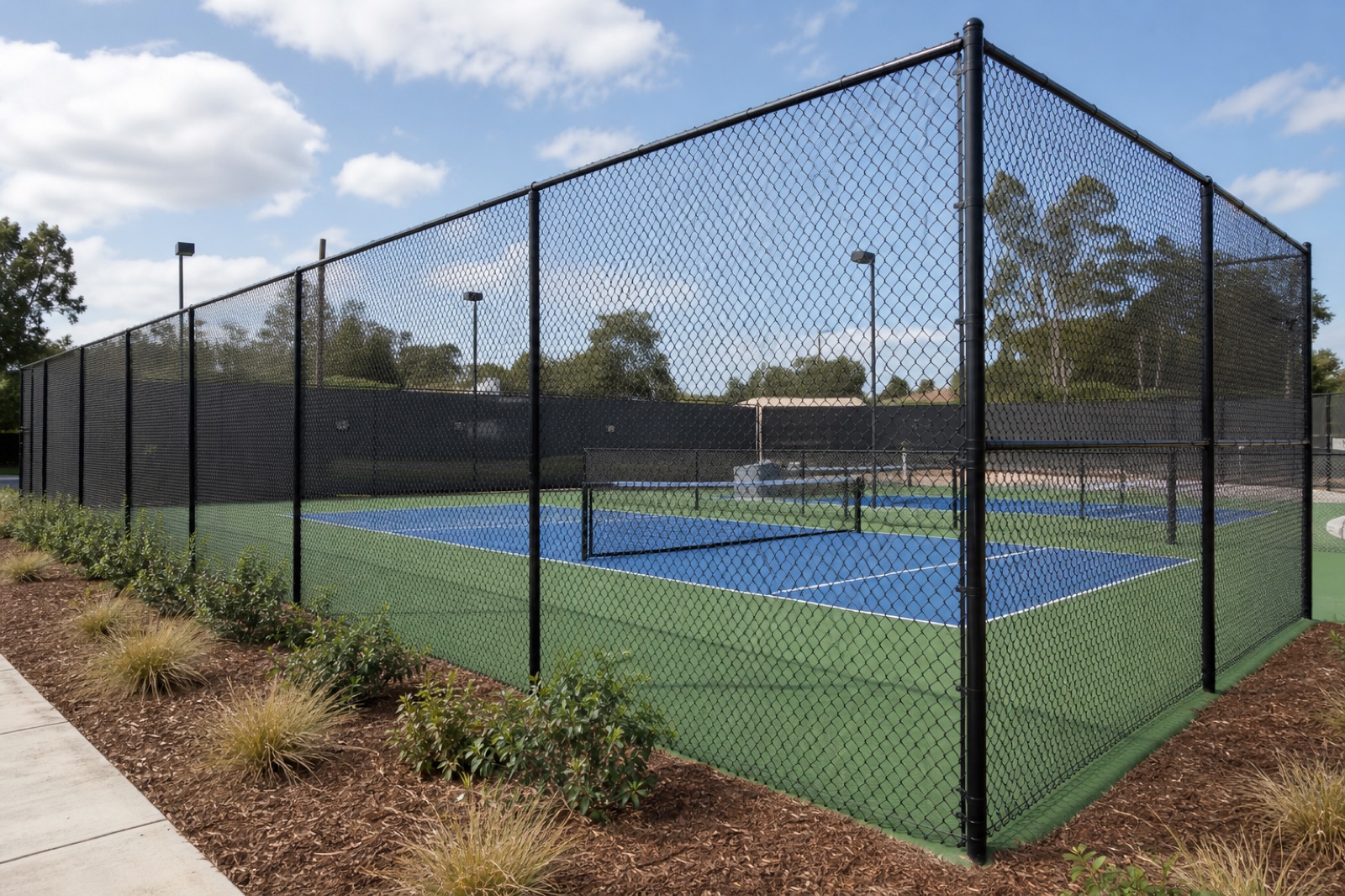
Quietly remove friction
A loose ball reaches the baseline. The fence catches it. Play continues. That simple moment depends on correct height, mesh, gates, and clearances.
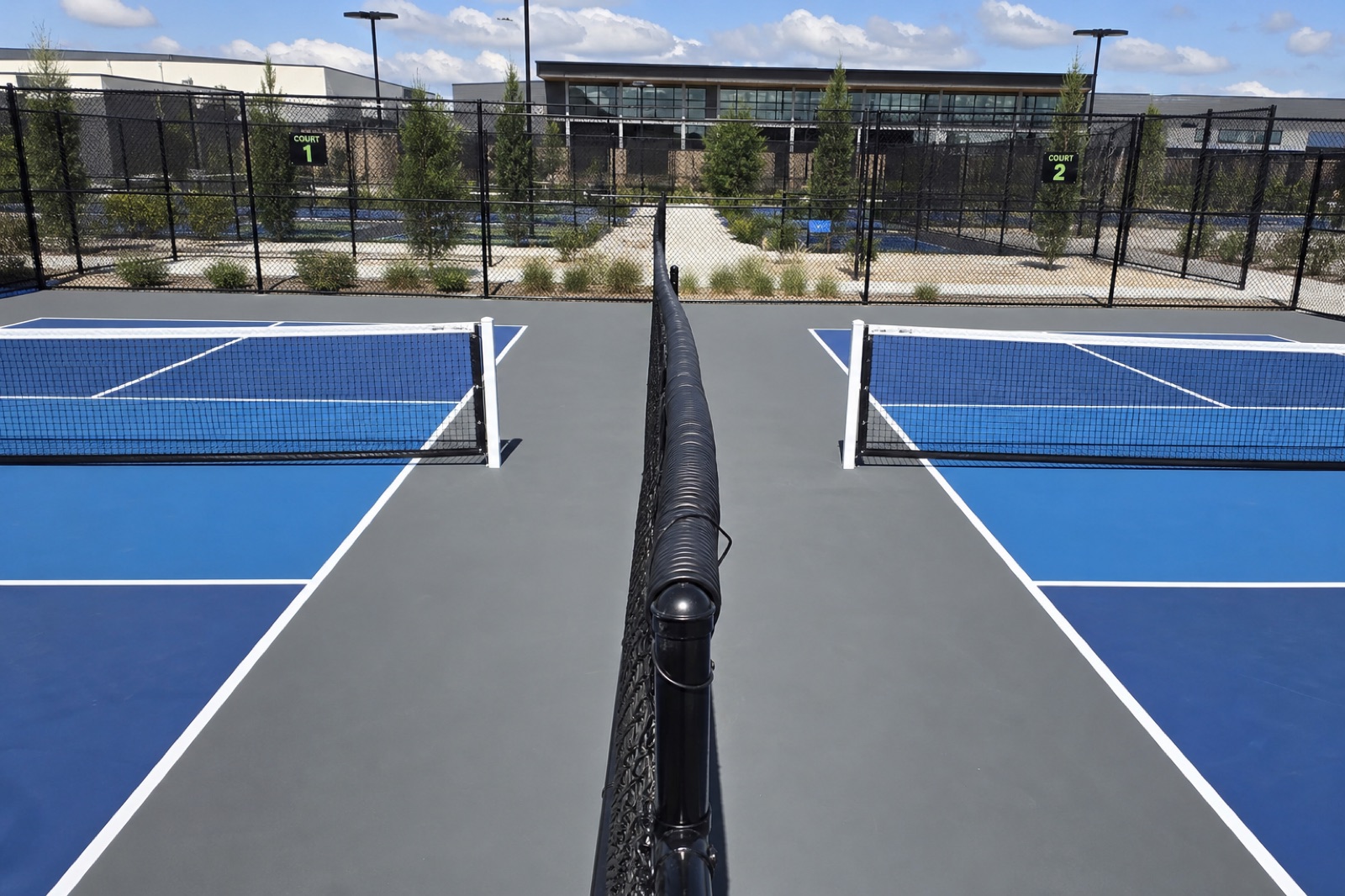
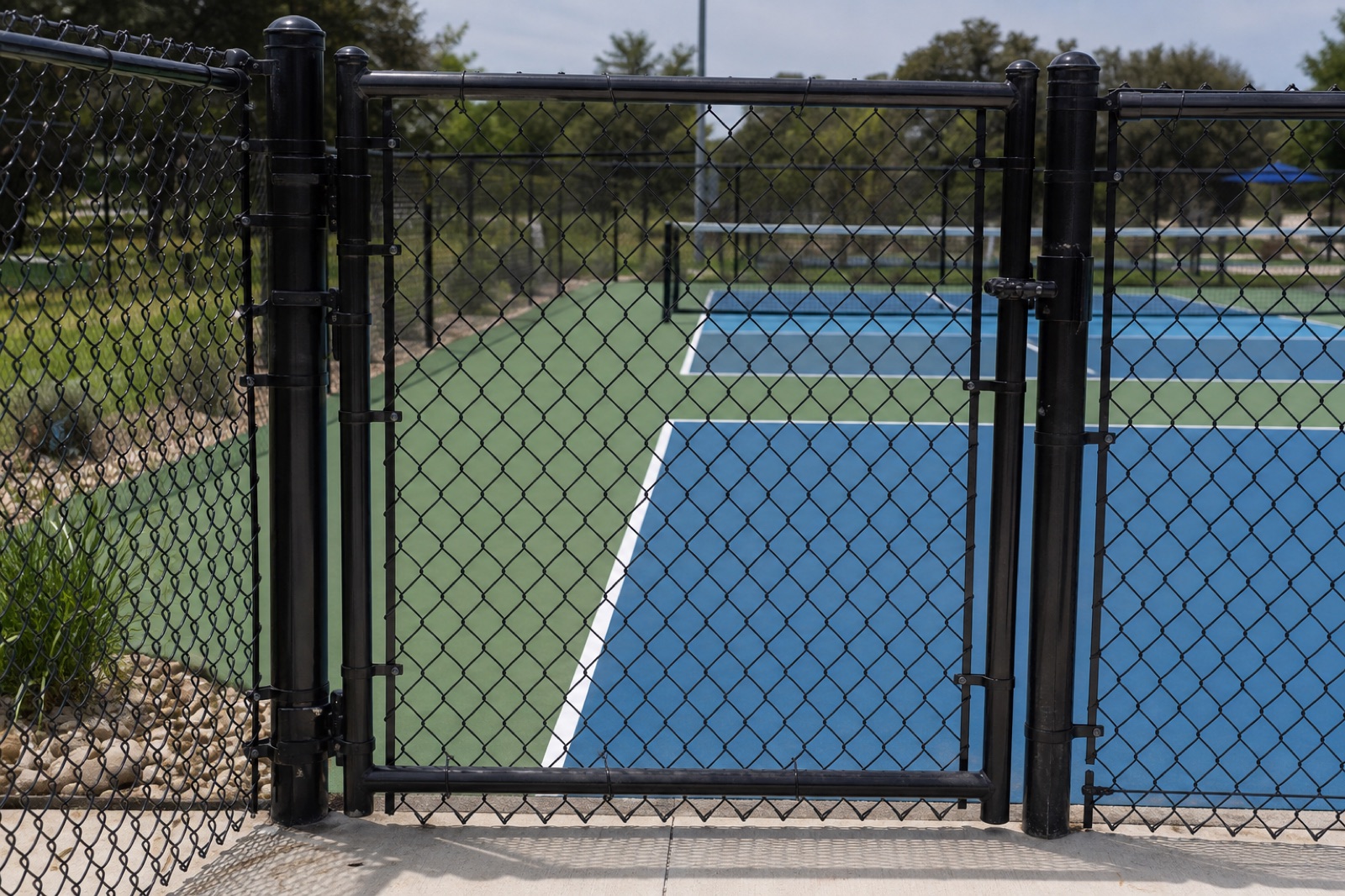
One court, several systems
| System | Primary role | Planning focus |
|---|---|---|
| Backstops | Contain balls behind baselines | Height, mesh, sightline, wind load |
| Side fencing | Contain cross-court balls and define edges | Run-off, height transitions, neighboring property |
| Interior dividers | Separate adjoining games | Openings, retraction, supervision, ball gaps |
| Player gates | Move groups in and out | Swing, run-off, queueing, accessibility |
| Maintenance gates | Admit equipment without crossing the surface | Width, route, locks, drainage, apron |
Complete enclosure
The fence also coordinates security, spectators, accessibility, maintenance, landscaping, windscreens, lighting, and property boundaries.
Use taller backstops where balls leave most often and openings small enough to contain a pickleball.
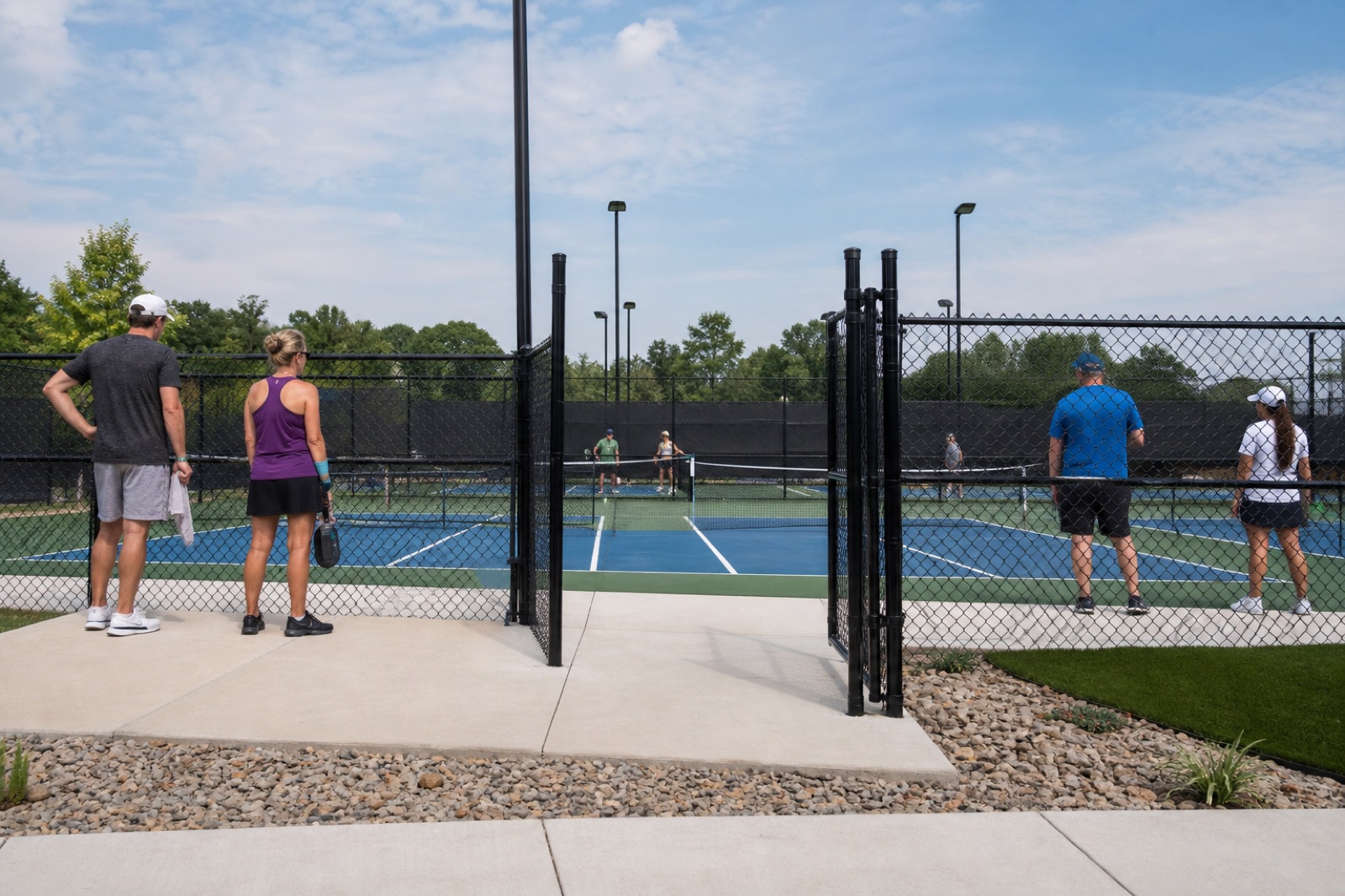
Keep gate swing and waiting players outside active run-off areas while preserving accessible and maintenance routes.
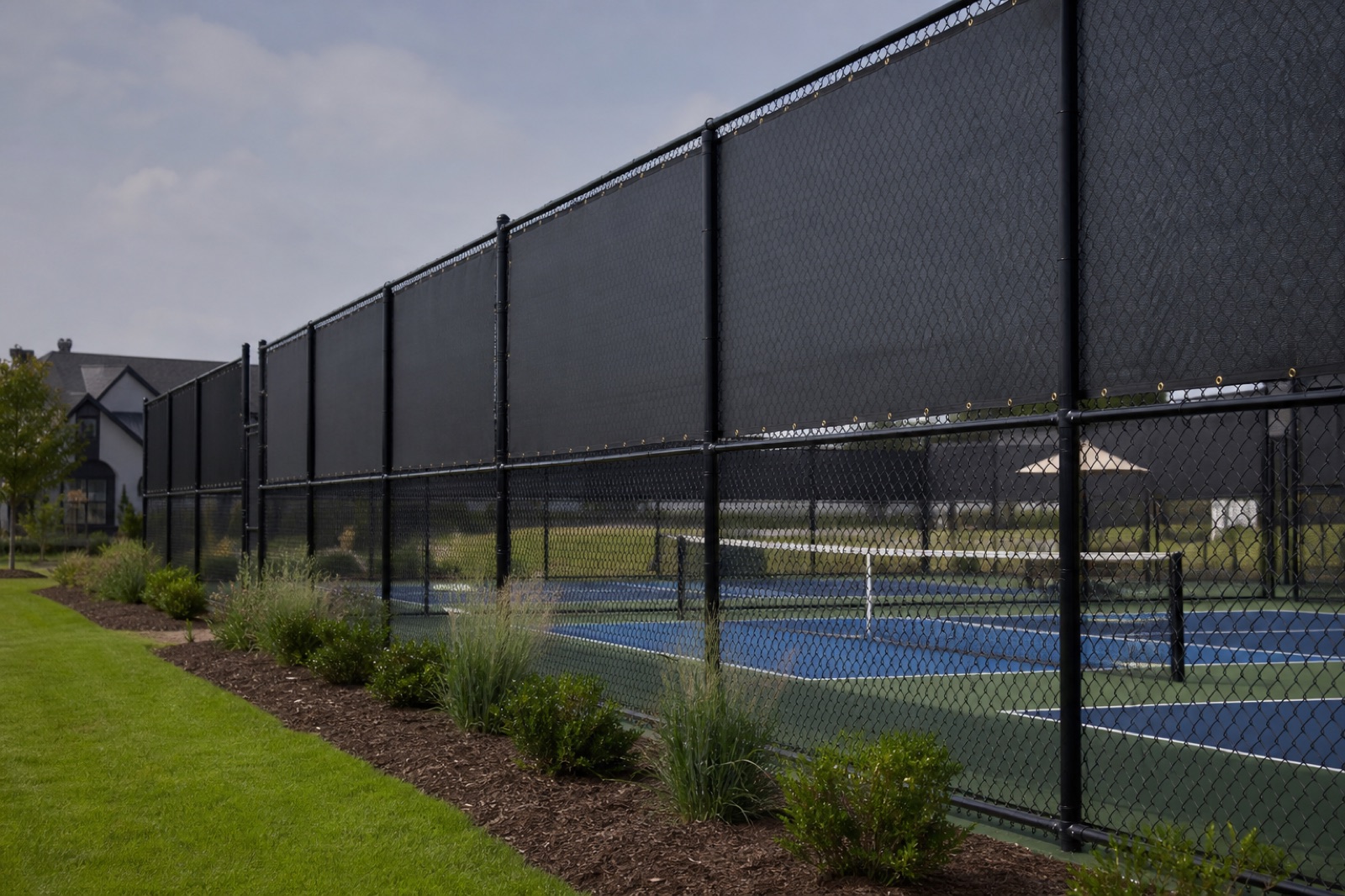
Dark coated systems can visually recede. Windscreens require structural review because they increase wind pressure.
Fencing process
Confirm court count, users, security, spectators, maintenance, accessibility, and operating hours.
Place backstops, side fencing, dividers, gates, run-off, paths, lights, and property boundaries.
Choose heights, mesh, finish, posts, rails, gates, dividers, and windscreen strategy.
Resolve drainage, utilities, lighting, surface edges, post footings, and equipment access.
Set the enclosure, adjust gates, tension mesh or netting, and verify safe clearances.
Document gate hardware, tension, coatings, windscreens, and periodic inspection needs.
Fencing FAQs
Players, loose balls, wheelchairs, spectators, and equipment all use the enclosure differently.
Reviewed July 2026. Containment and court-clearance context was checked against USA Pickleball construction guidance (opens in a new tab).
Not every temporary or private court requires a full enclosure, but fencing is valuable for ball containment, access, safety, dividers, windscreens, and fewer interruptions.
Current guidance recommends backstops at least 10 feet high. Side fencing may be lower, with taller fencing continuing from the backstops. Final heights must match the site and use.
The layout decides. Gates should support players, wheelchair access, emergency movement, and maintenance equipment without entering run-off space.
Divider fencing or netting is strongly worth considering because it reduces loose-ball interruptions and players crossing active courts.
Not automatically. Windscreens increase wind pressure on posts, rails, mesh, and foundations, so the enclosure should be evaluated first.
Design the complete enclosure
Send the layout, property address, access routes, boundaries, slopes, nearby buildings, lighting poles, and existing fencing. We will help plan heights, mesh, gates, dividers, windscreens, and foundations.